Fee calculator
Both funds earn 7% a year before fees, as an example. Fees are taken every year, so the gap grows over time.
Change any number and the result updates. Nothing you type leaves your device.
Three things to know.
Find the yearly fee
Look for the expense ratio, the yearly fee as a %, on the fund's page.
Compare like with like
Two funds that own the same companies can charge very different fees.
Cheaper is usually better
Fees are one of the few things you control. Every bit you save stays invested for you.
20 lessons, 30 seconds each.
One idea per video. Swipe to see them all.
Tools for this topic.
Optional. Everything above stays free. Pay once, download instantly, keep forever.
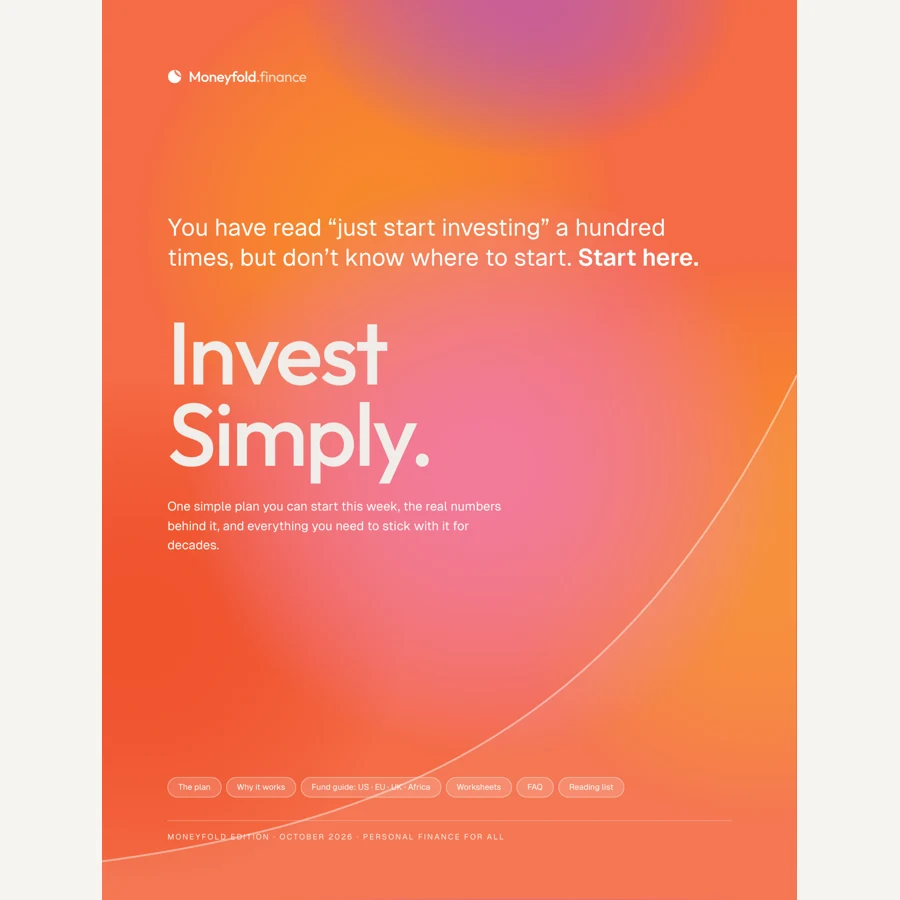
Invest Simply
Know what to buy and why. Then let time work.
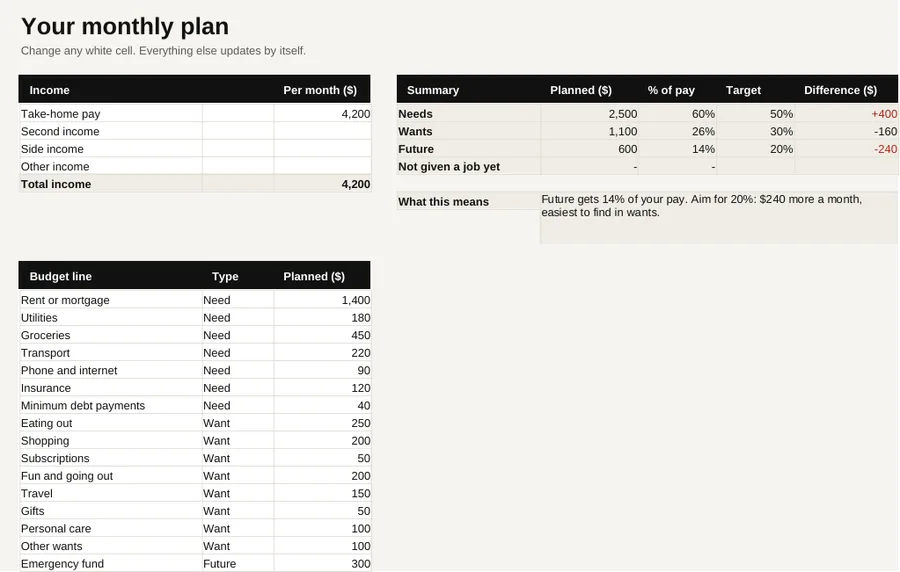
Monthly Money Plan
Every paycheck, planned in 10 minutes a month.
The Start Here Kit
A one-month spending tracker and a $1 a day savings challenge. Works in Excel and Google Sheets. Free to share.
Good questions.
What is an expense ratio?
Are there other fees?
Is a 1% adviser fee worth it?
Does a higher fee mean a better fund?
Accounts and the 401(k)
Where you invest matters as much as what you invest in. Start with the free money from your employer.