Where are you right now?
Tap the one that sounds most like you. No sign-up.
The Start Here Kit
A one-month spending tracker and a $1 a day savings challenge. Works in Excel and Google Sheets. Free to share.
Four steps. A free tool for each.
Do them in this order. Tap a step to open its calculator.
- Step 1
See where you stand
Know what comes in, what goes out, what you owe and own.
Money check-up - Step 2
Build your cushion
Save for surprises, so a big bill never becomes debt.
Emergency fund calculator - Step 3
Clear expensive debt
Pay off credit cards and get a real debt-free date.
Debt payoff planner - Step 4
Invest every month
A little into one low-cost index fund. Then leave it.
Growth calculator
Learn it in 30 seconds.
240 short lessons in 12 topics, in the same four steps. Pick a topic.
Step 1: See where you stand
Getting started20 lessonsBudget and spending20 lessonsMyths and mistakes20 lessonsStart with any amount20 lessonsStep 3: Clear expensive debt
Debt and credit cards20 lessonsTools to keep.
Everything above is free, always. If you want ready-made spreadsheets and printables to keep, they start at $3. Pay once, keep forever.
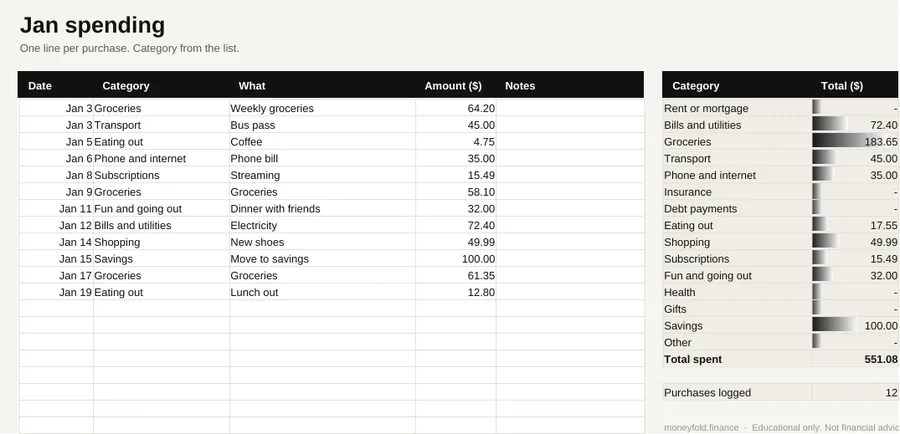
Simple Expense Tracker
See where every dollar goes, in 2 minutes a day.

Invest Simply
Know what to buy and why. Then let time work.
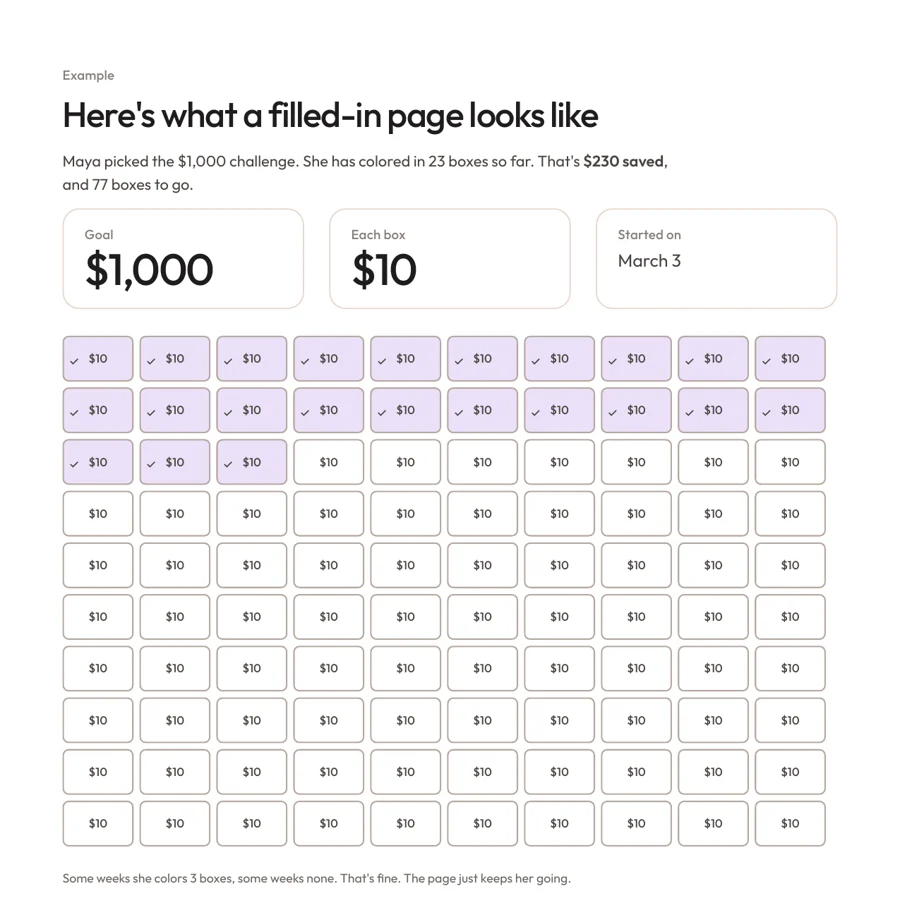
Savings Challenge Pack
10 challenges from $100 to $10,000. No math.
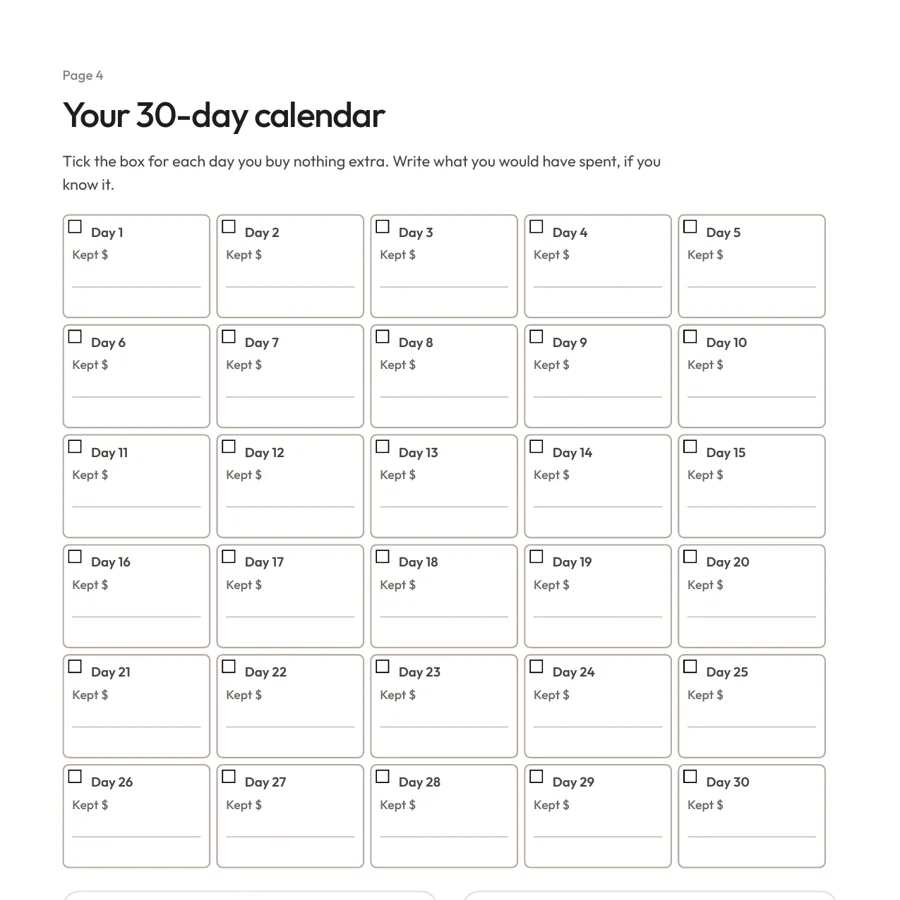
30-Day No-Spend Challenge
Spend nothing extra for 30 days. Keep the money.
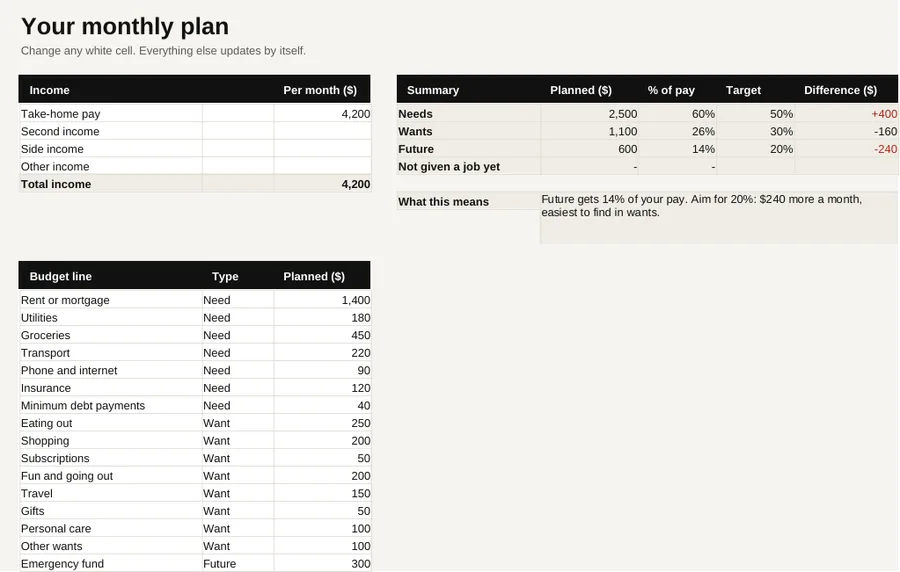
Monthly Money Plan
Every paycheck, planned in 10 minutes a month.
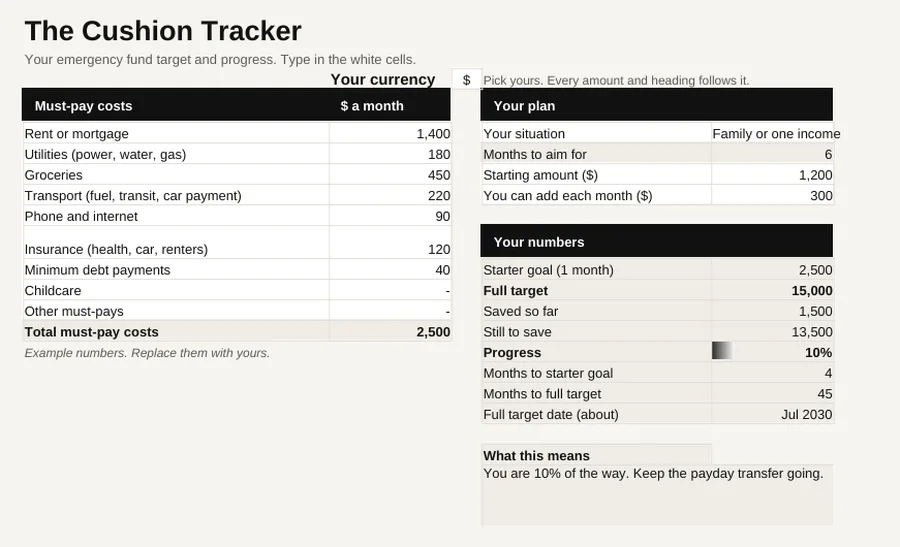
The Cushion Kit
Your safety cushion in 90 days.
Instant download. Works in Excel, Google Sheets and any PDF reader. Education only, not financial advice.
What people ask first.
I have debt and no savings. Where do I even start?
Is investing just gambling with extra steps?
How much should my emergency fund be?
Do I need to link my bank or pay anything?
I'm a student with almost no money. Is it worth starting?
I'm worried AI could change my job. What should I do?
New to money words? The 8 you will hear most
- Budget
- A plan for your money, made before the month starts. It tells each dollar where to go.
- Emergency fund
- Savings kept only for surprises, like a car repair or losing your job. Also called a cushion.
- Interest
- The cost of borrowing money. On savings, it's the money the bank pays you.
- Credit score
- A number lenders use to guess if you'll pay them back. Paying on time helps it most.
- Compounding
- When your money earns money, and then that money earns money too. Time makes it bigger.
- Index fund
- One fund that holds many companies at once, so you don't have to pick stocks yourself.
- Fees
- What a fund or account charges you each year. Small fees still add up over many years.
- 401(k) and match
- A US retirement account through your job. Many employers add free money, called a match.